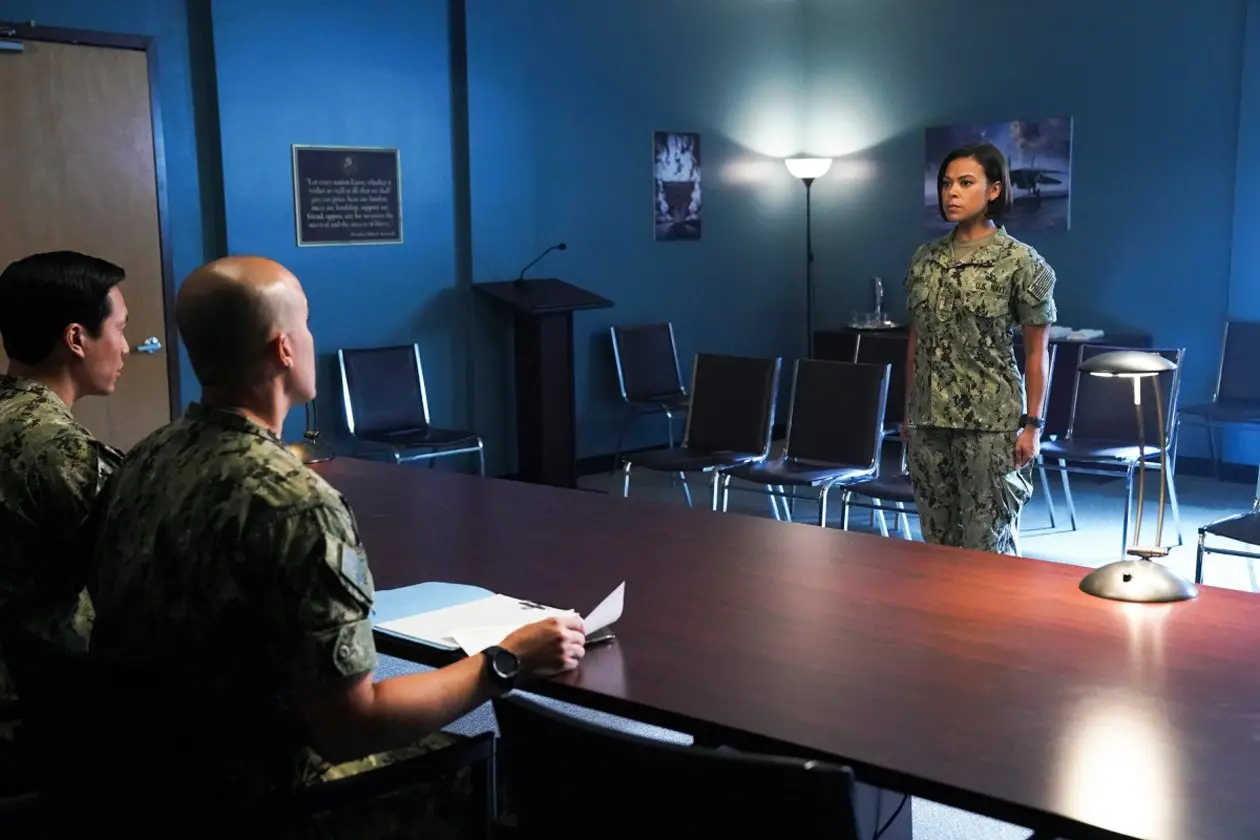
An Article 32 hearing is not a formality. What the defense does in the days before the hearing often decides whether the case goes to court-martial at all.
An Article 32 hearing notice means the government has formally charged you and a preliminary hearing (also known as an Article 32 hearing) is required before any general court-martial proceedings. The hearing is not a formality. What happens in that room can change what the government brings to trial, and sometimes whether there is a trial at all. Many service members arrive at an Article 32 underprepared because they have been told it is a rubber stamp on the way to court-martial. Experienced military defense counsel sees the Article 32 differently: it is the earliest stage where the defense can see the government’s story under something close to live conditions.
The Stakes of Misreading An Article 32
Service members often describe the Article 32 hearing as “procedural.” That framing is technically accurate and can be practically misleading. The hearing is procedural in the sense that it is required before any general court-martial referral, but the procedure itself has real consequences. The Preliminary Hearing Officer (PHO) writes a report that the Staff Judge Advocate and the Convening Authority rely on when deciding whether to refer charges, reduce them, or dismiss them. A well-prepared defense does not win the case at Article 32, but it often changes what the case looks like going forward.
The hearing’s standard is probable cause, which is a low threshold. But low is not automatic. Probable cause still requires facts, not speculation, and the defense at an Article 32 has a structured opportunity to question those facts before a neutral officer, an opportunity that narrows after charges are referred.
What an Article 32 Hearing Actually Does
Under 10 U.S.C. § 832, a preliminary hearing must be held before charges are referred to a general court-martial, unless the accused submits a written waiver that the Convening Authority accepts. The hearing is governed by Rule for Courts-Martial 405, which was substantially amended by Executive Order 14130 on December 20, 2024. Those amendments made the preliminary hearing a more formal and judicial proceeding and unfortunately restricted certain rights of the Accused more so than it had been for the previous decade, and every Article 32 proceeding conducted after that date now operates under the revised framework.
The PHO now must be certified by their service’s Judge Advocate General as having the requisite training and experience for the role. The PHO has four responsibilities under the statute:
- Determine whether there is probable cause to believe the accused committed the offenses charged
- Determine whether the court-martial has jurisdiction over the accused and the offenses
- Evaluate whether the form of the charges is correct
- Make a recommendation about the disposition of the case
The PHO’s report is not binding. The Convening Authority, on the advice of the Staff Judge Advocate under Article 34, decides whether to refer charges.
The Staff Judge Advocate makes an independent probable cause determination and cannot recommend referral of a specification unless it alleges an offense and is supported by probable cause. The Convening Authority can accept, reject, or modify what the PHO recommends. But the report travels with the case file, and a PHO who identifies weaknesses in the government’s evidence gives the defense material that shapes every decision downstream.
The hearing itself is typically conducted by a JAG officer acting as PHO, with a Trial Counsel (also a JAG, representing the government) presenting the case, and defense counsel representing the accused. In cases involving sexual offenses, a Special Victims’ Counsel or Victim’s Legal Counsel represents the alleged victim’s interests in matters involving privileges and victim protections. The accused has the right to be present and to be represented by counsel, but is not required to testify and is not required to attend.
Why the Evidence Rules Work Differently Here
The rules governing evidence at an Article 32 hearing are one of the most misunderstood parts of the process. Most of the Military Rules of Evidence do not apply. The government can present its case largely through written statements, investigation reports, and hearsay that would never be admissible at trial. In practice, this means the PHO often evaluates probable cause based on a paper record rather than live testimony.
A limited set of rules does apply. Privilege rules still apply, including the psychotherapist-patient privilege under Military Rule of Evidence 513 and the victim-advocate privilege under MRE 514. In cases involving allegations of sexual misconduct, Military Rule of Evidence 412, known as the rape shield rule, restricts what evidence the defense can introduce about the alleged victim’s sexual history. MRE 412 applies at Article 32, and any challenge to its application is heard in a closed hearing, often with a Special Victims’ Counsel representing the alleged victim’s interests.
Put simply: the government can use hearsay and paper evidence that would not survive at trial, but the defense cannot freely attack the alleged victim’s history the way some believe it can.
The alleged victim in a sexual offense case has a statutory right to decline to testify at the Article 32 hearing under Article 6b of the UCMJ. This changes the defense’s posture significantly. If the complaining witness does not testify, the government’s case at the hearing is built on CID or Military Police investigation reports, SANE examination summaries, and text message printouts rather than on cross-examinable testimony. The defense’s leverage shifts from cross-examination to challenging the reliability of the paper record and preserving objections for trial.
The 2014 congressional revisions to Article 32 narrowed what had been broader discovery rights in the old “Article 32 investigation” era. The current rule is not a discovery vehicle. What the defense can obtain before the hearing is defined by RCM 404A: charge sheet, documents the Convening Authority used to direct the hearing, and access to tangible objects the government intends to present. Additional evidence must be requested through the PHO or, under the 2024 amendments, through a pre-referral investigative subpoena.
What Experienced Defense Does Before the Hearing
Most of the work that decides an Article 32 outcome happens before the hearing itself. Experienced counsel starts with the investigation file. Not the charges. Not the Staff Judge Advocate’s preliminary advice. The underlying CID, NCIS, OSI, CGIS, or MP investigation report, read line by line, with every witness statement compared to every other witness statement. What the investigator wrote down is often different in small but decisive ways from what the charge sheet reflects.
The second task is the witness map. Who did the government interview? Who did they not interview? Which witnesses gave statements that contradict each other, and which gave statements that contradict the charge? The preliminary hearing is not a trial, but it is a rare structured chance to lock testimony under oath before the trial posture hardens or to get an idea as to what the Government is relying on for trial.
The third task is the motions analysis. What privilege issues are on the table? What MRE 412 questions exist? Is there unlawful command influence in the record? Is there a speedy trial clock running? Every one of these issues is preserved or forfeited based on what the defense does before and during the hearing. Article 32 is where the trial record begins to form.
In one outcome published on the firm’s experience page, Attorney Crisp defended an E-6 accused of molesting a twelve-year-old girl at Fort Belvoir, Virginia. Attorney Crisp presented evidence to the Article 32 Investigating Officer showing that the allegations had been fabricated for attention, and uncovered similar prior allegations the girl had made against others at other military installations, despite the government’s efforts to prevent their introduction at the hearing. The Investigating Officer recommended dismissal, and the Convening Authority agreed. The case ended there because the defense used the Article 32 stage to surface evidence the government’s investigation had missed, rather than waiting for trial to raise it.
That outcome was not accidental. It required reading the file, mapping the witnesses, running down collateral leads at other installations, and building the argument before the hearing opened. The hearing was where the outcome was shaped, but the work that shaped it had already been done. This is the approach Crisp and Associates Military Law brings to Article 32 hearings.
Where the Real Leverage Lives
The decision to testify (extremely rare cases), to attend without testifying, or to waive the hearing entirely is a strategic decision that can have significant consequences moving forward.
Waiving can make sense in specific situations:
- When the government’s hearing case would preview defense arguments the defense wants to save for trial or where the PHO might catch issues the Government has failed to foresee
- When MRE 412 or 513 issues would surface in a way that damages the trial posture
- When the government’s evidence is thin enough that forcing the Convening Authority to decide without a PHO report is the better play
None of these decisions are standard. Each is a judgment call that depends on the specific facts of the specific case.
For cases that proceed to the hearing, the defense’s goal is rarely to “win” at Article 32 in the way a trial is won because remember the PHO cannot dismiss charges, only make recommendations. The goal is shaping. Shaping what charges survive. Shaping what the PHO writes in the report. Shaping the Staff Judge Advocate’s Article 34 advice. Shaping the Convening Authority’s referral decision. Every one of those decision points is influenced by what happens at the hearing, and every one of them is closed or narrowed by what does not happen there.
An Article 32 is not the end of the case, but it is an important stage where the defense has to test the government’s story in something like live conditions before the trial posture begins to harden.
In one outcome published on the firm’s experience page, Attorney Crisp defended a One-Star General Officer accused of domestic violence and related charges in a case that was ultimately dismissed. Prior to the preferral of charges, a report was made to high-level commanders alleging misconduct, the matter was directed to the officer’s command, referred to CID for investigation, and the investigation results were referred to the Staff Judge Advocate. At that point, Crisp and Associates was retained, and the firm conducted its own exhaustive investigation, including re-interviewing witnesses to ensure their prior statements had not been misconstrued. At the Article 32 preliminary hearing, Attorney Crisp presented compelling evidence and a thorough cross-examination of the government witnesses. The Article 32 officer, a sitting military judge, recommended dismissal of the charges. The recommendation was so complete that no administrative action was taken against the general officer either. The case closed at the Article 32 stage because the defense arrived at the hearing ready to challenge the government’s investigation on its own terms, not merely to respond to it.
That level of preparation is what separates an Article 32 that changes a case from one that confirms it.
Not every Article 32 ends in dismissal, even with serious defense preparation. In many cases, the PHO recommends referral, the Staff Judge Advocate concurs, and the Convening Authority refers charges to general court-martial. When that happens, the defense work done at Article 32 is not lost. The locked testimony, the Government theory, the privilege motions filed, the gaps exposed in the investigation, and the weaknesses in the paper record all become part of the trial record. An Article 32 that does not end the case still shapes what the trial looks like, and in some cases, it shapes whether the government is willing to negotiate charges downward rather than go to trial at all.
Where Detailed Counsel and Civilian Counsel Serve Different Roles
Military defense counsel is assigned to every service member facing charges. Many of those assigned counsel are skilled, and some have significant Article 32 experience. Whether assigned counsel is the right fit for a specific case depends on caseload, experience with the charged offense, and the complexity of the investigation.
Civilian military defense counsel serves a different function in the same system. A civilian attorney retained for an Article 32 can devote focused attention to the case, often with a smaller caseload than assigned counsel carries. Preparation for an Article 32 typically starts with the investigation file read line by line, continues through witness mapping and privilege analysis, and includes the decision architecture about whether to attend, testify, or waive. The biggest distinction in civilian counsel and detailed counsel lies in their respective level of experience. Very often detailed counsel have tried less than five (5) cases whereas Mr. Crisp and his associates have tried many hundreds of panel/jury cases.
The decision to bring in civilian counsel turns on the stakes and the complexity of the government’s case. An investigation that involves multiple agencies, forensic evidence, or sensitive privilege issues benefits from counsel who have worked similar cases before. A straightforward set of charges with a single witness may be handled effectively by detailed counsel alone. The question is not whether detailed counsel is good. The question is whether the case demands more bandwidth and more focused experience than one attorney with a full docket can provide.
Jonathan W. Crisp, the founder of Crisp and Associates Military Law, served as an Army JAG officer from 2000 to 2007 and was selected by name to defend cases involving charges of detainee abuse at Abu Ghraib and the death of a detainee during interrogation. He has since litigated more than 275 jury (panel) trials to verdict and has represented clients worldwide, including in Kosovo, Iraq, Kuwait, Bahrain, Japan and Korea. That trial record includes cases at every level of preliminary hearing and court-martial practice.
Crisp and Associates Military Law is a veteran-owned firm that represents service members worldwide and travels to any military installation, home or abroad. The firm’s attorneys are admitted to practice before the Army Court of Criminal Appeals, the Air Force Court of Criminal Appeals, the Navy-Marine Corps Court of Criminal Appeals, the Court of Appeals for the Armed Forces, and the United States Supreme Court, and the team includes a retired Army JAG attorney, a reserve JAG Attorney, and former Air Force enlisted members.
The Article 32 window is short by design. Once the hearing concludes and the PHO’s report reaches the Convening Authority, the referral decision moves quickly, and the defense’s room to shape the case narrows sharply. A consultation during the Article 32 preparation window can clarify what the government’s investigation file actually says, what privilege and evidentiary issues are on the table, and what the realistic range of outcomes looks like.
Call 888-579-2618 to discuss your case before the Article 32 preparation window closes.
Past results do not guarantee future outcomes. Every case is evaluated on its own facts. This article is general information, does not constitute legal advice, and does not create an attorney-client relationship. Attorney advertising.